 Opium substance derived by collecting and drying the milky juice in the unripe seed pods of the opium Poppy, papaver somniferium. Opium varies in color from yellow to dark brown and has a characteristic odor and a bitter taste. With nearly 2 million pounds of opium being sold in China each year, opium weakened a large amount of the Chinese population. In the 19Th century, 10 percent of the Chinese population was smoking opium.
This also affected China economically, due to the large amount of resources, especially silver, flowing out of the country to pay for the opium. When the Chinese government first discovered opium smoking in the country in 1729, government promoted policies to prohibit the sale of opium for smoking, and shut down and banned opium-smoking houses. At the time, it became a very serious offense to sell opium for smoking purposes. It was classified in the same category as robbery and murder. The punishment was either banishment or execution.
Although the harsh punishments helped rid cities of local dealers and treat drug addicts, they did not stop British merchants from bringing in more opium to China. Because many Chinese government officials were corrupt and accepted bribes from British officials, they also became a part of the illegal opium trade. When the Chinese government discovered the British smuggling opium into China to sell, it was alarmed.
That was when Emperor Daoguang appointed Lin Tse-Hsua, an imperial commissioner, to lead an anti-opium campaign.Lin, in 1839, finally went to Canton, which was then the main port for foreign trade. There, he found a British warehouse full of opium. He confiscated its content and publicly destroyed more than 20,000 chests of the opium seized from British merchants by mixing them with salt and lemon before throwing them into the ocean.
The Opium Wars resulted in the victimization of China by foreign powers for decades to follow. It was not until 1949 and the victory of Mao Zedong and communism that the unequal treaties signed between the Chinese government and the foreign powers were abolished. It was also after 1949 that China took back all the ports, except for Hong Kong. Hong Kong remained a British territory until 1997.

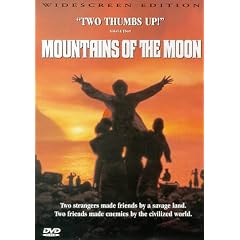 The two Europeans, Richard Burton and John Speke had many expectations and hardships that faced in the Continent of Africa. They started out in Somalia and went west to the middle of Africa that's where they met their most fears. But as they sailed to Africa, they saw Africans working to bring the goods of Africa to sail it to Europe. As they traveled they camped in the desert to rest for the night. As they were sleeping they were ambushed by a tribe with spears and shields. Richard and John fought against them but there were to many. So they had to escape, luckily Richard Burton escaped but with a spear through his mouth. John was captured and tied up on the sand floor. John escaped the next mourning but before he escaped, the tribe stabbed his legs and arms for great amount of pain.
 He was born a Jew, but his father converted the family to Christianity in order to get a job. Marx did not believe in god and thought workers were controlled by religion. He said, religion is the opiate of the people. Opium is a drug. Marx's ideas were known as Communism, a word formed for common.
 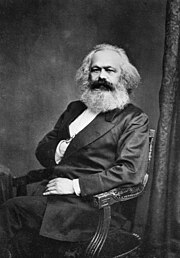 Karl Marx was best known as a 19Th century revolutionary. His ideas were very influential and other countries through the years practiced them, however not in the same pure form Marx invented.The philosopher, social scientist, historian and revolutionary, Karl Marx, is without a doubt the most influential socialist thinker to emerge in the 19Th century. Although he was largely ignored by scholars in his own lifetime, his social, economic and political ideas gained rapid acceptance in the socialist movement after his death in 1883. Until quite recently almost half the population of the world lived under regimes that claim to be Marxist. This very success, however, has meant that the original ideas of Marx have often been modified and his meanings adapted to a great variety of political circumstances. In addition, the fact that Marx delayed publication of many of his writings meant that is been only recently that scholars had the opportunity to appreciate Marx's intellectual stature. Karl Marx felt that the Industrial Revolution allowed the rich to get richer and the poor to get poorer.The industrial revolution inspired Marx to invent communism because he thought the working class was doomed to forever work for low wages.He believed that since there were more workers than owners, the workers would eventually get fed up, start a revolution and take over.
 Being a nationalistic is just being proud of your country. But there are holidays that expresses your nationalism. For example: In America there is Easter, July 4, ETC. There are maps that represents the own country. Every information about the country is on the map. By 1871, Europe was remapped with the rise of two newly united nations - the Kingdom of Italy and the German Empire. The unification movements of both countries took place at roughly the same time in the mid-19Th century and were motivated by the same historical trends - that of liberalism and nationalism. The following discussion presents a comparison of the two unification's. Before the French Revolution and Napoleon Bonaparte, both Italy and Germany shared some similar features. Italy was divided into a number of separate states which were ruled by despotic kings. Yet the Italians shared a common language and a common history - the Roman Empire. Many still had memories of the ancient unity and glory.Italy has been the home of many European Culture, such as the and the Romans, and later was the birthplace of the Universitys and of the movement of the Renaissance, that began in Tuscany and spread all over Europe. Italy's capital Rome was for centuries the center of Western Civilization ; it also spawned the Boraque movement and seats the Catholic Church . Italy possessed a colonial empire from the mid-nineteenth century to the mid-twentieth century.
 Simon Bolivar controlled a military and is a liberator. He came to south America one day and controlled most of it. Except the other part (which is Brazil) that was conquered by Portugal. Gave independence to Colombia, Venezuela, Peru, Ecuador, and named the land Bolivia. He named Bolivia by his last name.
 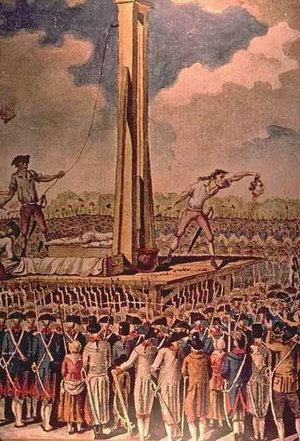 It occurred fifteen months after the French Revolution. Ranging from 16,000 to 40,000 deaths. It was the Rein of terror that appeared to chop many heads off. It was a blade that hung on the top of a rectangular Guillotine. At the bottom had the hole, and where they put the heads so the blade could come down and chop the head off. Many famous people died from the Guillotine, like Marie-Antoinette, the Girondins Philippe Egalite, and Madam Roland.
 1)A)People were so critical against Nobility(The second Estate), because they were rich and didn't need to pay taxes. They can also hold position such as being officers in the army. They almost had complete power in peasants and did not have to do military service. Nobles lived in palaces and luxury chateaux.
 John Locke had many ideas on the constitution. He was also an oxford scholar, Medical researcher and Physician, Political operative, Economist and Ideologue. Back then he said that all men were created from Life, Liberty and the pursuit of Happiness. People govern their own lives and have the power to change. It would most likely people would have problems with their safety and happiness. their would always be evil on every corner, but their would be security, protection against those crimes. People has their own power of governing themselves. Humans had the right to do what they can unless their is security patrolling the place. The king of Great Britain wanted to tyranny other colonies. But that was not part of the constitution. So the only thing he was doing was injuries and usurpation's. But then they wanted to create a new government. A government that would organize their powers and life (Not meant to control them but to help the people).Tax would be paid to the goverment for power.